
Most people brush their teeth every morning and night, but daily brushing does not always mean effective brushing. A toothbrush can pass over the teeth without reaching the gumline, the back molars, or the inside surfaces where plaque often gathers first. Small habits make a real difference. The angle of the brush, the amount of pressure you use, the length of time you spend, and the order you follow can all affect how clean your teeth feel after you finish.
Knowing how to brush teeth properly gives your mouth better daily support between professional cleanings. The goal is not to scrub harder or brush longer than needed. The goal is to clean each surface with steady, gentle movements that remove plaque before it hardens into tartar. Once tartar forms, it cannot be brushed away at home and needs professional care.
This guide explains how to properly brush your teeth, how to floss, what mistakes to avoid, and how regular professional teeth cleaning helps protect your smile over time.
Why How to Brush Teeth Properly Makes a Difference
Plaque is a sticky film that forms on teeth throughout the day. It collects bacteria, food particles, and acids that can irritate gums and contribute to tooth decay. Brushing teeth twice a day helps reduce plaque before it has time to harden.
Technique matters because plaque does not collect evenly. It often sits along the gumline, between teeth, behind the lower front teeth, and around the back molars. Those areas are easy to miss during a rushed routine. A better brushing pattern helps you reach them more consistently.
Brushing also supports fresher breath and cleaner-looking teeth. Surface stains can build up over time, especially in areas that are not brushed well. Regular brushing helps limit buildup, and professional teeth cleaning can remove tartar and polish away surface stains that daily care cannot fully address.
Choose the Right Toothbrush and Toothpaste
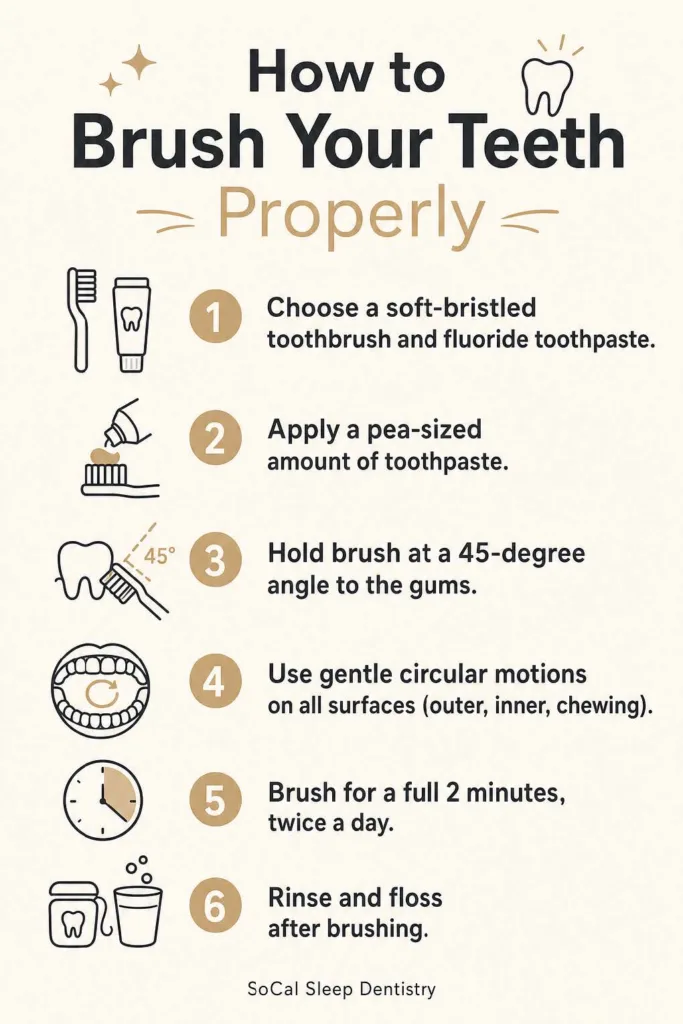
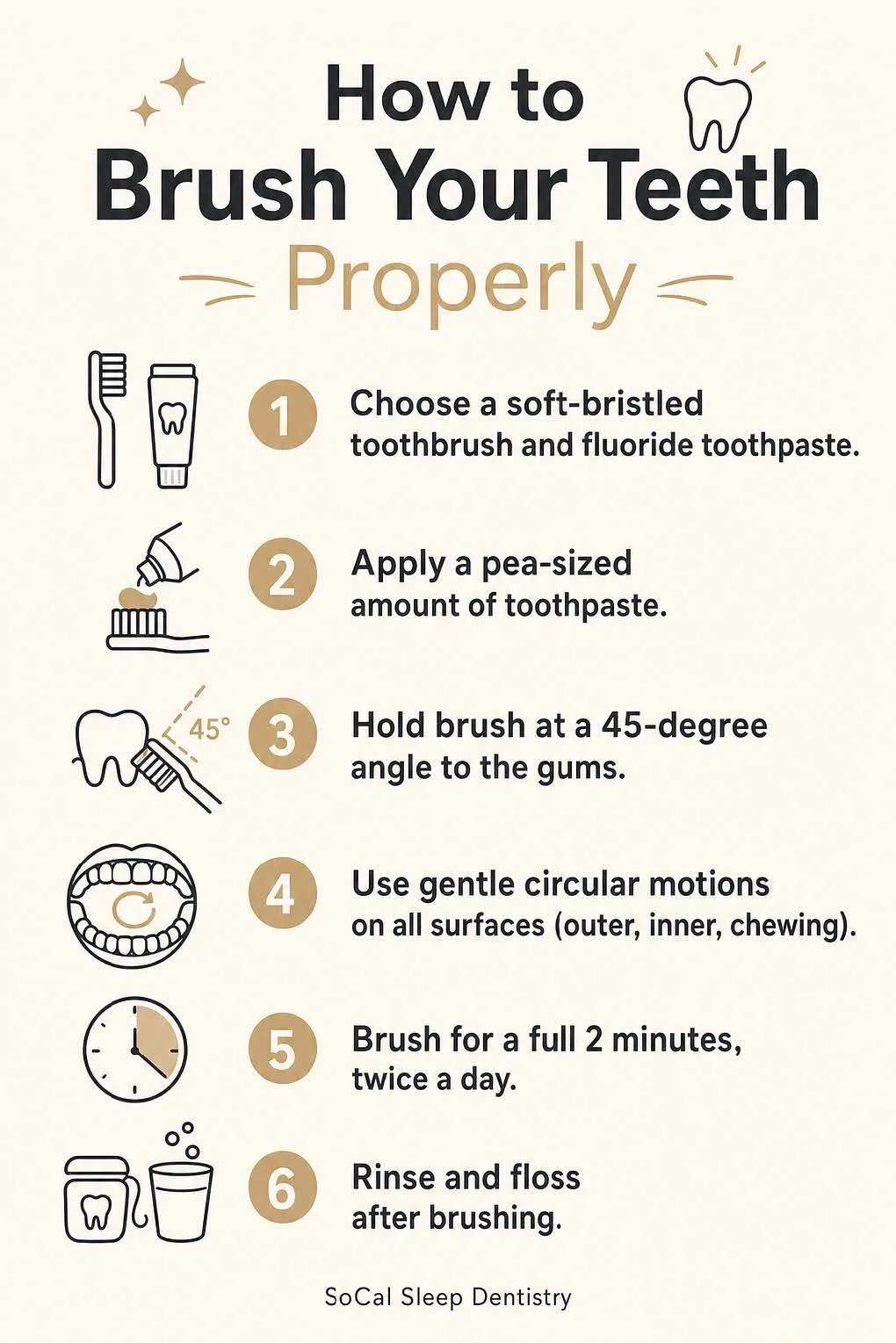
A soft-bristled toothbrush is usually the best choice for daily brushing. Soft bristles can clean plaque from the teeth and gumline without harsh pressure. Medium or firm bristles may feel more powerful, but they can be rough on gum tissue and enamel.
The toothbrush head should fit comfortably in your mouth. A smaller head can make it easier to reach the back teeth and move around the cheeks, tongue, and gums. Replace your toothbrush every three to four months, or sooner if the bristles look bent or frayed.
Fluoride toothpaste is a helpful daily option because it supports enamel and helps protect against cavities. A pea-sized amount is enough for most adults. Using too much toothpaste can create extra foam, which may make it harder to brush for the full two minutes.
How to Properly Brush Your Teeth Step by Step
A clear routine makes brushing easier to repeat. Use the same pattern each time so no area gets skipped. Think of your mouth in four sections: upper right, upper left, lower right, and lower left. Give each section about 30 seconds.
Place the Brush at the Gum Line
Hold the toothbrush at a 45-degree angle toward the gums. This position helps the bristles reach the area where the teeth and gums meet. Plaque often gathers there, so this angle is more effective than holding the brush flat against the teeth.
The bristles should touch the gumline lightly. If they bend sharply or flatten, ease up on the pressure. Gentle contact is enough when the brush is positioned correctly.
Use Small Circular Motions
Move the toothbrush in small circles across one or two teeth at a time. Avoid hard back-and-forth scrubbing. Strong pressure can irritate gums and may wear down enamel near the gumline.
Slow, controlled circles allow the bristles to clean curved tooth surfaces. This method also makes it easier to stay focused on one section before moving to the next.
Clean the Outside and Inside Surfaces
Start with the outside surfaces of your teeth, then move to the inside surfaces. Many people spend more time on the front teeth because they are easy to see. The back teeth and inside surfaces need the same attention.
For the inside of the front teeth, turn the toothbrush vertically and use gentle up-and-down strokes. This area often collects buildup, especially behind the lower front teeth.
Brush the Chewing Surfaces
Place the brush flat against the chewing surfaces of the molars. Use short, gentle strokes to clean the grooves where food can settle.
Brush for Two Full Minutes
Two minutes gives you enough time to clean every section. A timer can help if you tend to finish too quickly. Many electric toothbrushes pause or buzz every 30 seconds to remind you to move to a new area.
After brushing, spit out the toothpaste. Ask your dentist whether rinsing right away is best for you, especially if you use fluoride toothpaste for cavity prevention or sensitivity.
How to Brush Your Teeth Properly With Sensitive Gums
Sensitive gums need gentle care, not skipped care. If your gums feel sore after brushing, check your pressure first. A toothbrush should glide over the teeth, not press firmly into the gum tissue.
Bleeding can happen when gums are inflamed, especially if plaque has been sitting along the gumline. Keep brushing gently and floss daily. If bleeding continues, schedule a dental visit so your provider can check for gingivitis, gum disease, or other concerns.
People with tooth sensitivity may benefit from toothpaste made for sensitive teeth. Lukewarm water may feel better than very cold water. Brushing immediately after acidic foods or drinks can be rough on enamel, so rinse with water and wait about 30 minutes before brushing.
Floss Before or After Brushing
The question of flossing before or after brushing comes up often. Flossing before brushing can loosen plaque and food particles between teeth before toothpaste reaches those spaces. That order may help fluoride contact more of the tooth surface.
Some people prefer flossing after brushing because their mouth already feels clean. That can still be effective. The best order is the one you will follow every day.
A toothbrush cannot fully clean between teeth. Floss reaches the tight spaces where plaque and food can sit out of view. Skipping flossing leaves those areas more vulnerable, even if your brushing routine is strong.
How to Floss Without Hurting Your Gums
Start with about 18 inches of floss. Wrap most of it around one middle finger and a smaller amount around the other middle finger. Hold a short section between your thumbs and index fingers so you can guide it with control.
Slide the floss gently between two teeth. Do not snap it into the gums. Curve the floss around one tooth in a C shape and move it up and down along the side of the tooth. Then curve it around the neighboring tooth and repeat before moving to the next space.
Use a clean section of floss as you move through the mouth. If string floss feels difficult, ask your dental team about floss picks, interdental brushes, or a water flosser. The right tool can make daily flossing easier to maintain.
Common Brushing Mistakes to Avoid
Brushing mistakes are common, and most are easy to correct once you notice them. The biggest issue is usually rushing. A fast routine can leave plaque behind even when you brush twice a day.
Too much pressure is another common problem. Brushing harder does not mean brushing better. Plaque is soft before it hardens, so careful contact works better than force.
Old toothbrushes can create another issue. Frayed bristles cannot clean as well, and they may make brushing feel less controlled. Replacing the brush regularly keeps the bristles working as they should.
Nighttime brushing deserves special attention. Saliva flow slows during sleep, so going to bed with plaque and food particles on the teeth gives bacteria more time to sit undisturbed. A careful bedtime routine can make your morning mouth feel fresher.
How Professional Teeth Cleaning Supports Your Home Routine
Daily brushing and flossing do a lot, but they cannot remove tartar. Professional teeth cleaning removes plaque, tartar, and surface stains using dental instruments and polishing techniques.
At SoCal Sleep Dentistry, teeth cleaning may include an initial exam, plaque and tartar removal, polishing, and fluoride treatment when appropriate. Patients with signs of gum disease may need a deeper cleaning called scaling and root planing to clean below the gumline and smooth the tooth roots.
Cleanings also give you personalized feedback. Your provider may notice that plaque collects behind your lower front teeth, around the gumline, or near dental work. That information can help you adjust your brushing technique at home.
SoCal Sleep Dentistry focuses on thorough, comfortable care. Patients who feel anxious about dental visits can ask about anesthesia options, including nitrous oxide, moderate sedation, deep sedation, and general anesthesia. Comfort matters because regular preventive care is easier to maintain when dental visits feel manageable.
Make Brushing Teeth Easier to Keep Up With
A strong brushing routine should feel simple enough to repeat. Keep your toothbrush, toothpaste, and floss in a visible spot. Brush in the same order each time. Use a timer until two minutes feels natural.
Children may need help with brushing longer than parents expect. Supervision, a small toothbrush, and a simple visual routine can help them build better habits.
Adults can benefit from small adjustments, too. If you drink coffee, snack often, wear aligners, have dry mouth, or have dental restorations, your dental team may suggest more tailored home care. The right approach should fit your mouth and your daily routine.
Keep Your Next Cleaning Easier With Better Brushing
Knowing how to brush teeth properly gives your teeth and gums stronger daily support. Use a soft toothbrush, angle it toward the gumline, brush in small circles, clean every surface, floss daily, and give the routine a full two minutes. These steps can help reduce plaque and make your professional cleanings more productive.
SoCal Sleep Dentistry offers teeth cleaning with a focus on comfort, prevention, and personalized care. Schedule your next teeth cleaning today and get guidance that helps your at-home routine work better between visits.
Frequently Asked Questions
How long should I brush my teeth?
Brush for two minutes twice a day. Spend about 30 seconds on each section of your mouth, so the front, back, inside, and chewing surfaces all get attention.
Should you floss before or after brushing?
Flossing before brushing can loosen plaque before toothpaste reaches the teeth. Flossing after brushing can still work well if you do it daily.
How often should I replace my toothbrush?
Replace your toothbrush every three to four months, or sooner if the bristles are frayed. Worn bristles do not clean as well.
Can brushing remove tartar?
Brushing can remove soft plaque, but tartar needs professional removal. A teeth cleaning visit can clear hardened buildup safely.
What should I do if my gums bleed?
Use gentle pressure, floss daily, and schedule a dental visit if bleeding continues. Ongoing bleeding may be a sign of gum inflammation or gum disease.
Is an electric toothbrush better than a manual toothbrush?
Both can work well. An electric toothbrush may help if you brush too hard, rush, or have trouble reaching certain areas.
How do I brush around dental work?
Use gentle circles around crowns, fillings, veneers, bridges, implants, or orthodontic appliances. Ask your dental team for tools that fit your specific dental work.
How often should I schedule a professional teeth cleaning?
Many patients schedule cleanings every six months. Your dentist may recommend a different schedule based on tartar buildup, gum health, cavity risk, and sensitivity.