
We all know that brushing our teeth is important. But brushing alone is not enough to keep your mouth completely clean. Your toothbrush cannot reach the tight spaces between your teeth. That is where flossing comes in. If you want to prevent cavities and keep your gums healthy, you need to know how to floss the right way. Many people skip this step because they think it takes too much time or they are not sure they are doing it correctly.
Flossing is actually very simple once you get the hang of it. It only takes a couple of minutes a day, but it makes a huge difference in your oral health. It removes the hidden food and plaque that cause bad breath and tooth decay. At SoCal Sleep Dentistry, we want to help our patients build great habits at home. Let us break down the steps so you can feel confident about your daily routine.
Why Is Flossing So Important?
Before we talk about the steps, let us look at why you should floss. Plaque is a sticky film of bacteria that forms on your teeth every day. When you eat, the bacteria in plaque use the sugars in your food to make acids. These acids eat away at your tooth enamel and cause cavities.
If plaque is not removed, it hardens into tartar. Tartar can only be removed by a dentist or hygienist during a professional cleaning. Plaque and tartar also irritate your gums, leading to gum disease. Flossing is the only way to clean the sides of your teeth and just under the gumline where your toothbrush cannot reach. By taking a few minutes to floss, you are protecting your smile from serious problems down the road.
How to Floss Your Teeth Step by Step
Learning how to floss your teeth is easy. You just need a little practice. Here is a simple guide to get you started.
Step 1: Get the Right Amount of Floss
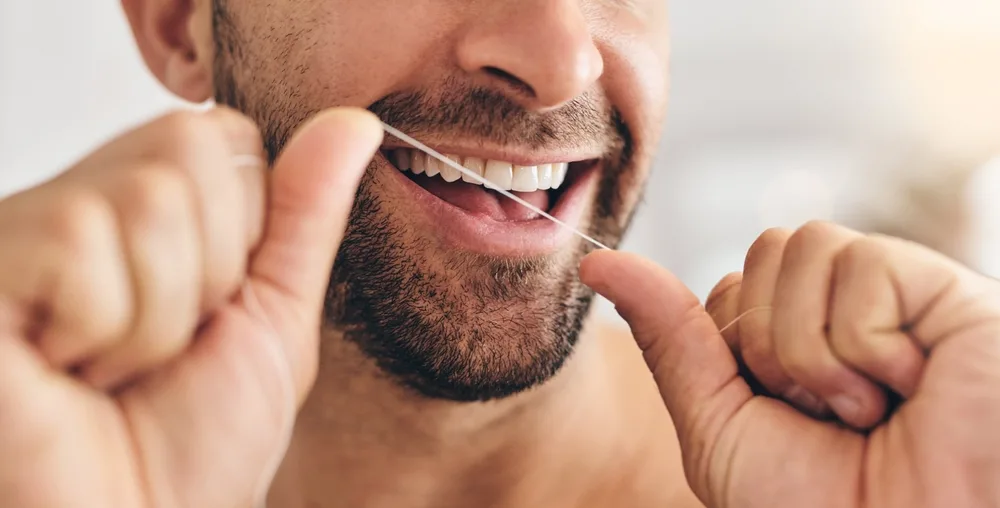
Start by breaking off about 18 inches of floss. Wind most of it around the middle finger of one hand. Wind the rest around the middle finger of your other hand. This finger will take up the used floss as you go.
Step 2: Hold the Floss Correctly
Hold the floss tightly between your thumbs and index fingers. You should have about one to two inches of floss stretched tight between your hands. This gives you the control you need to guide the floss between your teeth.
Step 3: Guide the Floss Gently
Gently slide the floss between two teeth. Use a gentle rubbing motion. Never snap or force the floss down into your gums, as this can cut or bruise the delicate tissue.
Step 4: Curve the Floss
When the floss reaches the gumline, curve it into a C-shape against one tooth. Gently slide it into the space between the gum and the tooth.
Step 5: Clean the Tooth
Hold the floss tightly against the tooth. Gently rub the side of the tooth, moving the floss away from the gum with up and down motions. Repeat this on the rest of your teeth. Do not forget the back side of your very last tooth.
Should You Floss Before or After Brushing?
A very common question is should you floss before or after brushing. Dentists often debate this, but recent studies suggest that flossing first is the better choice.
When you floss first, you loosen the plaque and food particles from between your teeth. Then, when you brush, your toothbrush sweeps all of that loosened debris away. Flossing first also clears the way so the fluoride in your toothpaste can reach the spaces between your teeth. This helps strengthen the enamel in those hard-to-reach areas.
So, if you are wondering whether to floss before or after brushing, try making flossing the first step in your routine.
How to Floss with Braces
If you have braces, keeping your teeth clean takes a little more effort. You might be wondering how to floss with braces when the wires are in the way. It is very important not to skip this step, as food gets trapped easily around the brackets.
The best tool for this is a floss threader. It looks like a flexible plastic needle. You put the floss through the loop of the threader, and then use the threader to pull the floss under the main wire of your braces. Once the floss is under the wire, you can curve it around the tooth and clean the sides just like normal. You have to re-thread it for every tooth, so it takes more time, but it is the best way to prevent cavities while you have braces.
How to Floss Properly with Other Tools
Traditional string floss is great, but it is not the only option. If you have trouble using string floss, there are other tools that can help you learn how to floss properly.
Floss picks are very popular. They hold a small piece of floss tight on a plastic handle. They are easy to use with one hand and are great for reaching the back teeth. Water flossers are another good choice. They shoot a steady stream of water between your teeth to wash away plaque and food. They are especially helpful for people with braces or bridges. Interdental brushes are tiny brushes that fit between the teeth.
Your dentist can help you decide which tool is best for your smile.
Making Flossing a Daily Habit
The hardest part of flossing is remembering to do it every day. To make it a habit, try to do it at the same time every day. For most people, flossing right before bed is the easiest time. Your mouth stays clean before you go to sleep, which is when bacteria do the most damage.
You can also try keeping your floss in plain sight. Put it right next to your toothbrush so you see it every time you brush. If you use floss picks, keep a bag in your car or at your desk so you can use them after lunch. The more convenient you make it, the more likely you are to stick with it.
The Benefits of a Clean Mouth
When you floss every day, you will notice the benefits very quickly. Your breath will smell fresher because you are removing the food and bacteria that cause bad odors. Your gums will also look and feel healthier. They will be a nice pink color instead of red and swollen.
A clean mouth also means fewer trips to the dentist for fillings. By preventing cavities, you save yourself time, money, and discomfort. Flossing is a small investment of time that pays off in a big way for your overall health.
Professional Cleanings at SoCal Sleep Dentistry
Even if you floss perfectly every day, you still need professional cleanings. Your hygienist has special tools to remove any tartar that has built up over time. They can also spot early signs of cavities or gum disease before they become big problems.
At SoCal Sleep Dentistry, we provide gentle and thorough teeth cleanings. We can also check your flossing technique and give you tips on how to improve. Regular visits to the dentist are a key part of keeping your smile healthy and bright.
Schedule Your Next Cleaning Today
Do not wait until your teeth hurt to see the dentist. Keep your smile in top shape with regular cleanings and checkups. Contact SoCal Sleep Dentistry today to book your next appointment. We are here to help you achieve your best smile.
Frequently Asked Questions
How often should I floss?
You should floss at least once a day. Most dentists recommend flossing in the evening before you go to bed so your teeth are clean while you sleep.
Is it normal for my gums to bleed when I floss?
If you have not flossed in a while, your gums might bleed a little at first. This is a sign of mild inflammation. If you keep flossing daily, the bleeding should stop within a week or two.
Can I reuse a piece of floss?
No, you should never reuse floss. Used floss is covered in bacteria and plaque. Reusing it can put that bacteria back into your mouth and cause an infection.
What type of floss is best?
The best floss is the one you will actually use. Waxed floss slides easily between tight teeth, while unwaxed floss might squeak to let you know the tooth is clean. Try a few types to see what you like best.
Does a water flosser replace regular flossing?
A water flosser is a great tool, especially for people with braces, but it does not completely replace string floss. String floss is better at scraping the sticky plaque off the surface of the tooth.