

Parents often notice a loose baby tooth before they expect it. One day, a child bites into an apple or wiggles a front tooth at dinner, and suddenly the next stage of dental growth feels very real. Adult teeth do not arrive all at once, and the process can feel confusing when one child’s teeth come in early, while another child’s teeth take more time. The timing can vary, but there is a general pattern most children follow.
So, when do adult teeth come in? For many children, the first adult teeth begin appearing around age 6. These may be the first molars at the back of the mouth or the lower front teeth. Over the next several years, baby teeth loosen, fall out, and make room for permanent teeth. By the early teen years, most adult teeth have erupted, except wisdom teeth, which often arrive later.
This guide explains the usual timeline, what parents may notice at each stage, and when a dental visit can help.
When Do Adult Teeth Come In for Most Children?
Adult teeth, also called permanent teeth, usually begin coming in around ages 6 to 7. The first permanent molars are often among the earliest to appear. These molars come in behind the baby teeth, so they do not replace a tooth that falls out. Many parents miss them at first because there may not be a loose tooth beforehand.
Around the same time, the lower front baby teeth may loosen and fall out. The permanent front teeth then begin to appear. This is often the stage when parents first ask, “When do your adult teeth come in?” because the change is visible when a child smiles or talks.
The full process takes years. Adult teeth continue coming in through childhood and the early teen years. The last adult teeth are usually the wisdom teeth, which may erupt between ages 17 and 21. Some people never develop wisdom teeth, and some wisdom teeth stay under the gums or need removal.
When Do Adult Front Teeth Come In?
Adult front teeth usually appear between the ages of 6 and 9. The lower central incisors often come in first, followed by the upper central incisors. These are the teeth most people picture when they think of a child losing baby teeth.
The new front teeth may look large at first. This is normal. A child’s jaw and facial structure are still growing, so adult teeth can seem oversized for a while. Small spaces between the front teeth can also be normal during this stage.
Parents may notice that the adult tooth comes in slightly behind the baby tooth, especially in the lower front area. Some people call this “shark teeth.” The baby tooth may still loosen and fall out on its own. If the baby tooth does not move or the adult tooth continues erupting in an unusual position, a dentist can check whether treatment is needed.
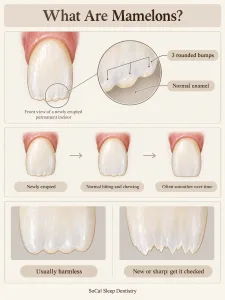
Front teeth can also come in with ridges along the biting edge. These small bumps are called mamelons. They often wear down naturally as the teeth are used for biting and chewing.
When Do Molars Come In?
Molars have an important role in chewing, and they come in at different stages. The first adult molars usually erupt around ages 6 to 7. They sit behind the baby molars and do not replace any baby teeth. Since they arrive quietly at the back of the mouth, they need extra attention during brushing.
Second molars usually come in around ages 11 to 13. These are sometimes called twelve-year molars. They erupt behind the first adult molars and can cause mild gum tenderness as they push through.
Wisdom teeth are third molars. They usually appear later, often between ages 17 and 21. Some wisdom teeth come in without problems, but others do not have enough room. Impacted wisdom teeth may stay trapped under the gum or press against nearby teeth. A dentist can monitor their position with dental X-rays.
Molars have deep grooves on the chewing surfaces. Food and plaque can collect there, especially when a child is still building strong brushing habits. Regular dental checkups can help protect these teeth soon after they come in.
When Do All Adult Teeth Come In?
Most permanent teeth, except wisdom teeth, are usually in place by the ages of 12 to 13. The exact timing can vary. A child who loses baby teeth early may get adult teeth earlier. Another child may follow the same pattern more slowly.
A full adult mouth has 32 teeth, including wisdom teeth. Without wisdom teeth, most people have 28 adult teeth. Since wisdom teeth may come in during the late teens or early twenties, the answer to “when do all adult teeth come in” depends on whether wisdom teeth erupt.
By around age 21, many people who develop wisdom teeth have had them erupt or have had them evaluated. Some wisdom teeth never fully come through. Some are removed before they cause discomfort, crowding, infection, or damage to neighboring teeth.
A dentist can track development with exams and imaging. This matters because teeth can form beneath the gums long before they are visible in the mouth.
A General Adult Tooth Timeline
The timing of adult teeth can vary, but these age ranges are common. A child may fall outside these ranges and still have healthy dental development. A dental visit can give a clearer answer if a tooth seems early, late, or out of position.
- First molars: Usually around ages 6 to 7
- Lower central incisors: Usually around ages 6 to 7
- Upper central incisors: Usually around ages 7 to 8
- Lateral incisors: Usually around ages 7 to 9
- First premolars: Usually around ages 10 to 11
- Second premolars: Usually around ages 10 to 12
- Canines: Usually around ages 9 to 12
- Second molars: Usually around ages 11 to 13
- Wisdom teeth: Often around ages 17 to 21
This timeline gives parents a helpful starting point. A pediatric dentist or family dentist can compare the timeline with your child’s mouth, X-rays, bite, and overall growth.
What Happens to Baby Teeth?
Baby teeth hold space for adult teeth. They help a child chew, speak, and smile while the jaw grows. They also guide many permanent teeth into position.
A baby tooth usually becomes loose when the adult tooth underneath begins moving toward the surface. The roots of the baby tooth slowly break down, and the tooth starts to wiggle. Once the root has dissolved enough, the tooth falls out.
Parents should avoid pulling a baby tooth too early. A tooth that is ready may come out with light pressure. A tooth that still feels firmly attached should be left alone. Pulling too soon can hurt the gums or cause bleeding.
Baby teeth can still get cavities, even though they eventually fall out. Decay in baby teeth can cause pain, infection, and problems for nearby adult teeth. Routine dental visits are valuable during this stage because the dentist can check both the baby teeth and the adult teeth developing underneath.
What if Adult Teeth Come In Late?
A delayed adult tooth is not always a problem. Some children naturally develop later than others. Family history can play a role, and teeth often follow patterns similar to those of parents or siblings.
A dentist may want to check a delayed tooth if the matching tooth on the other side came in months earlier, if a baby tooth will not loosen, or if there is swelling, pain, or crowding. X-rays can show whether the adult tooth is present, how it is positioned, and whether something is blocking its path.
Common reasons for delayed eruption include lack of space, a stubborn baby tooth, extra teeth, impacted teeth, or differences in jaw growth. A dentist may monitor the tooth, recommend removing a baby tooth, or refer the child for orthodontic evaluation.
Early guidance can make treatment simpler in some cases. The goal is to give the adult tooth the best chance to come in safely and in a healthier position.
What if Adult Teeth Come In Crooked?
Adult teeth do not always come in perfectly straight. Mild crowding, spacing, and rotation can happen as the mouth changes. Some teeth improve as the jaw grows and nearby teeth erupt.
Crowding may need attention if teeth overlap, block each other, or make brushing difficult. A pediatric dentist, family dentist, or orthodontist can check the bite and decide whether monitoring is enough.
Front teeth may look uneven during the mixed dentition stage, which is the period when a child has both baby teeth and adult teeth. This stage can look awkward for a while. The canines and premolars still need to come in, and the bite is still developing.
Crooked teeth are not only a cosmetic concern. Overlapping teeth can trap plaque and make cleaning harder. Bite problems can also affect chewing, jaw comfort, and tooth wear. Dental visits help track these changes before they become harder to manage.
How to Care for New Adult Teeth
New adult teeth need consistent care as soon as they appear. The first molars deserve special attention because they come in behind the baby teeth and are easy to miss with a toothbrush.
Children should brush twice a day with fluoride toothpaste. A parent may need to supervise brushing until the child has the coordination to clean well. Many children need help reaching the back molars, brushing along the gumline, and using the right amount of pressure.
Flossing becomes more important as teeth touch each other. If flossing feels difficult, floss picks may help a child build the habit. A dentist can show the right technique during a visit.
Diet also affects new adult teeth. Frequent snacking, sticky foods, and sugary drinks can increase plaque acids. Water, balanced meals, and consistent brushing can help protect enamel.
Dental sealants may be recommended for molars. Sealants are thin protective coatings placed on the chewing surfaces to help reduce food and plaque buildup in the grooves.
When a Pediatric Dentist or Family Dentist Should Check Development
Parents do not need to track every tooth alone. A dental team can monitor tooth eruption, jaw growth, bite changes, and cavity risk over time. Regular checkups are especially helpful during the mixed dentition stage because many changes happen quickly.
A visit is a good idea if a child has pain, swelling, a loose tooth that will not come out, an adult tooth coming in far behind a baby tooth, or a tooth that seems much later than expected. A dentist can check whether the tooth needs more time or whether treatment could help.
SoCal Sleep Dentistryoffers dental care for patients with a focus on comfort and personalized treatment. The practice provides general dental care, cosmetic dentistry, and anesthesia services through its Westlake Village office and mobile anesthesiology services. Families who feel nervous about dental visits can ask about comfort-focused options and care planning through SoCal Sleep Dentistry.
Helping Your Child Feel Ready for Adult Teeth
A loose tooth can feel exciting, strange, or uncomfortable for a child. Parents can make the process easier by explaining what is happening in simple terms. The baby tooth is making room, and the adult tooth is taking its place.
A child may want to wiggle a loose tooth. Gentle wiggling is usually fine if the tooth is already loose. Pain, swelling, or strong resistance mean the tooth may need more time.
Brushing around loose teeth can feel tender, but the area still needs cleaning. A soft toothbrush and gentle movements can help. Skipping the area may allow plaque to build up around the gums.
Celebrate the milestone without making the child feel pressured. Some teeth fall out quickly, and others take weeks. A calm approach helps children feel more confident as their smile changes.
Growing Smiles Need Steady Dental Support
Knowing when adult teeth come in can help parents understand what is typical and what may need a closer look. Most children begin getting adult teeth around age 6, with front teeth and first molars often appearing first. Many permanent teeth are in place by the early teen years, and wisdom teeth may arrive later.
Each child’s timeline can vary, which is why regular dental visits are so helpful. A dentist can check tooth development, watch for crowding, protect new molars, and guide parents through each stage with clear answers.
For personalized dental care and comfort-focused treatment options, book an appointment with SoCal Sleep Dentistry today.
Frequently Asked Questions
When do your adult teeth come in?
Adult teeth usually begin coming in around ages 6 to 7. The first adult molars and lower front teeth are often among the earliest to appear.
When do adult front teeth come in?
Adult front teeth often come in between the ages of 6 and 9. The lower front teeth may appear first, followed by the upper front teeth.
When do all adult teeth come in?
Most adult teeth, except wisdom teeth, are usually in place by the ages of 12 to 13. Wisdom teeth often come in later, usually between the ages of 17 and 21.
Are molars supposed to come in without a baby tooth falling out?
Yes. The first adult molars come in behind the baby teeth and do not replace a baby tooth. Parents may not notice them right away because no tooth falls out first.
Should I worry if my child gets adult teeth early?
Early adult teeth are not always a concern. A dentist can check development if teeth come in very early, if baby teeth are not loosening, or if crowding appears.
What if an adult tooth comes in behind a baby tooth?
This can happen, especially with lower front teeth. If the baby tooth does not loosen or the adult tooth keeps coming in behind it, schedule a dental visit.
Do wisdom teeth always come in?
No. Some people do not develop wisdom teeth. Others have wisdom teeth that stay under the gums or need removal due to limited space.
Can a pediatric dentist help with adult teeth coming in?
Yes. A pediatric dentist or family dentist can monitor tooth eruption, check for crowding, take X-rays when needed, and help guide care as a child grows.