
After a tooth is removed, the empty space can look alarming even when healing is going well. You may see a dark clot, pale tissue, mild swelling, or a gap where the tooth used to be. That can make it hard to know what is normal and what needs urgent dental attention.
Dry socket is one of the complications people worry about after an extraction. It happens when the protective blood clot is lost, breaks down too early, or does not form as expected. Without that clot, bone and nerves in the socket can be exposed, which may cause strong pain a few days after the appointment.
At SoCal Sleep Dentistry, tooth extractioncare includes exams, X-rays when needed, local anesthesia, sedation options, gauze placement, and aftercare instructions. Knowing what to watch for can help you respond quickly if healing starts to feel wrong.
What Does Dry Socket Look Like?
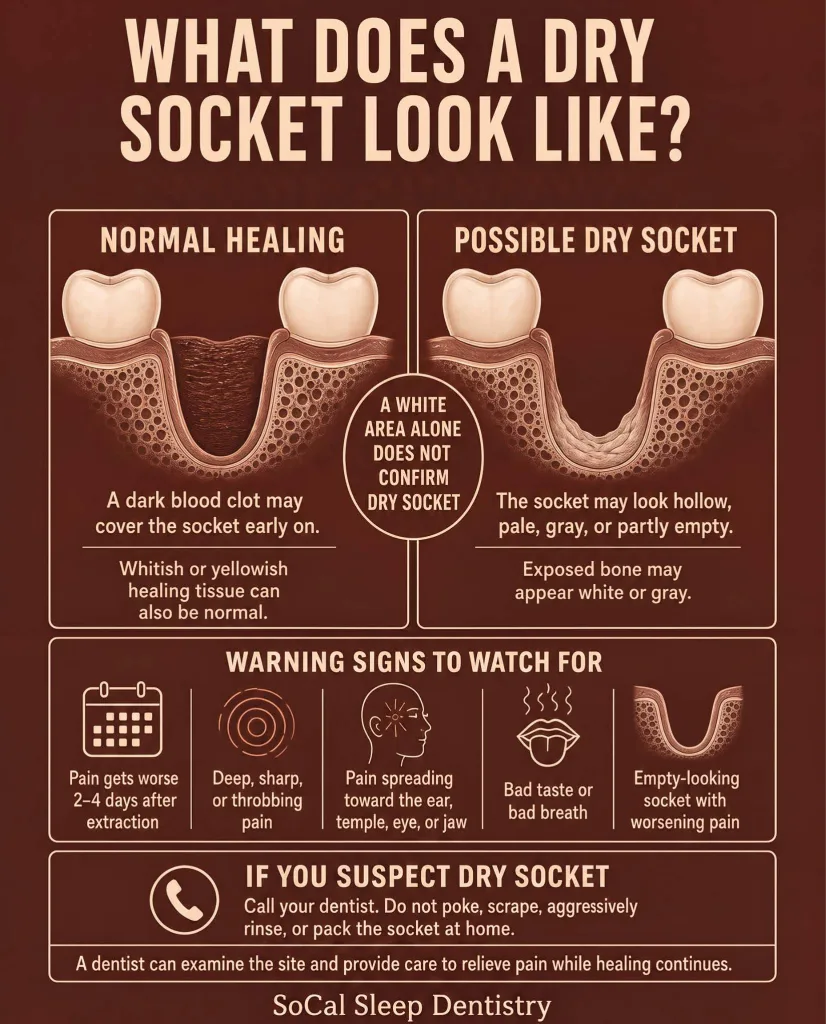
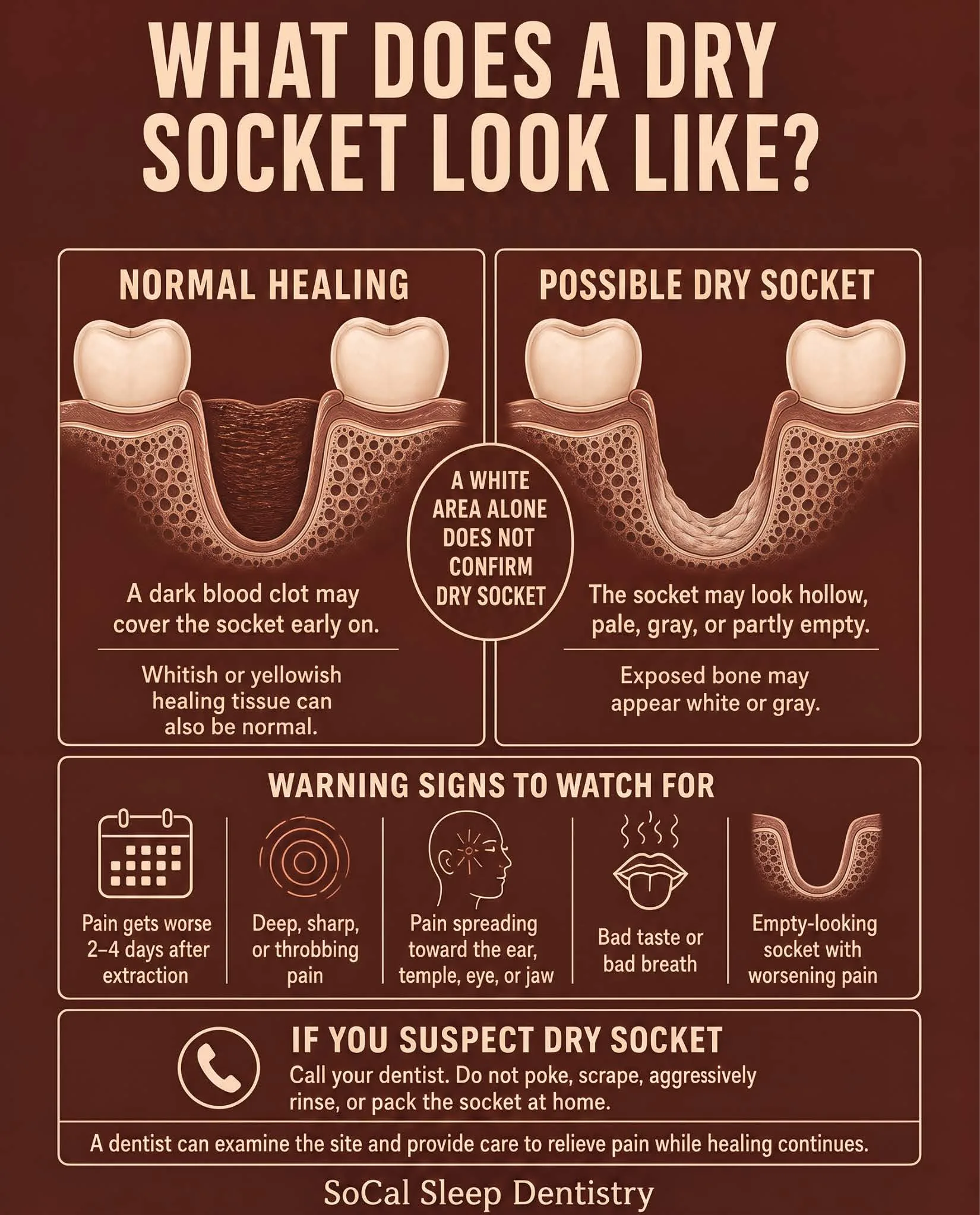
Dry socket may look like an empty or partly empty tooth socket, sometimes with whitish bone visible instead of a dark blood clot.
- A normal socket often has a dark clot early on.
- Dry socket may look hollow, pale, gray, or exposed.
- Pain often becomes worse 2 to 4 days after extraction.
- Bad taste, bad breath, or pain toward the ear can happen.
Appearance alone can mislead you, so worsening pain should be checked.
What Is Dry Socket?
Dry socket is a painful healing problem that can happen after a tooth extraction. The blood clot that should protect the socket is missing, dislodged, or broken down too soon.
Why the Blood Clot Helps
The clot acts as a protective covering while the gum and bone begin healing. It shields the deeper tissues and supports early recovery inside the socket.
If the clot is lost too soon, the area can become painful because the underlying bone and nerves are no longer covered.
When It Usually Appears
Dry socket often becomes noticeable a few days after the extraction. Many people feel initial soreness after treatment, then notice pain getting stronger instead of easing.
That timing is a useful clue. Normal healing should start trending toward improvement after the early recovery period.
Why It Needs Dental Care
Dry socket is not something to scrape, rinse aggressively, or pack at home. A dentist can clean the area if needed and place a medicated dressing to help relieve pain while the socket heals.
Normal Socket After Tooth Extraction
A normal socket after tooth extraction does not always look neat. The area can look dark, red, yellowish, or white in different stages of healing. Those colors can be part of normal tissue repair.
Early Healing
During the first day, a dark red clot may sit in the socket. Mild bleeding, swelling, and tenderness can happen. Gauze is often used to help control bleeding after treatment.
Tissue Changes
Over the next few days, the socket may look less dark as healing tissue forms. A whitish or yellowish film can appear as part of healing. Color alone should not drive the decision.
Gradual Improvement
Normal soreness should slowly improve. You may still feel tender around the area, but the pain should not suddenly become sharp, spreading, or difficult to manage after it had started to settle.
Dry Socket Symptoms to Watch For
Dry socket symptoms are often more useful than appearance alone. The socket is hard to see clearly at home, and lighting can make healing tissue look unusual.
Pain That Gets Worse
The main warning sign is pain that becomes stronger a few days after extraction. It may feel deep, sharp, throbbing, or difficult to control with the pain guidance you were given.
Pain Spreading Toward the Ear
Pain may travel toward the ear, temple, eye, or jaw on the same side as the extraction. This can feel different from normal soreness around the gum.
Bad Taste or Bad Breath
Some people notice an unpleasant taste or odor. This can happen when the socket is exposed and irritated. It should be checked, especially when it appears with intense pain.
An Empty-Looking Socket
You may see a socket that looks hollow or lighter than expected. Exposed bone can look pale, white, or gray. Do not poke the area to check it, since touching the socket can irritate healing tissue.
What Does a Dry Socket Look Like – Wisdom Teeth Removal
A dry socket after wisdom teeth removal can look similar to a dry socket after other extractions, but it can be harder to see because the socket sits far back in the mouth. You may notice pain before you can see anything clearly.
Back Teeth Are Harder to Inspect
Wisdom tooth sockets are difficult to view without dental lighting. Trying to pull the cheek back or touch the area can irritate the site. Pain patterns and timing are often more useful than a mirror check.
Wisdom Tooth Sites Can Be More Tender
Wisdom tooth removal may involve more tissue handling, especially if the tooth was impacted. Some soreness is expected. Pain that gets worse after a few days, spreads toward the ear, or comes with a bad taste should be assessed.
Do Not Dig Into the Socket
Avoid using fingers, toothpicks, cotton swabs, or sharp objects to look for a clot. This can disturb healing and increase irritation.
What Raises the Risk of Dry Socket?
Dry socket can happen even when you try to follow instructions, but certain habits and situations can increase the risk.
Suction and Spitting
Straws, forceful spitting, and strong rinsing can disturb the clot during early healing. Follow the rinse instructions given by your dental team.
Smoking or Vaping
Smoking and vaping can interfere with healing and may increase dry socket risk. They also create suction and expose the site to irritants.
Touching the Area
Touching the socket with your tongue, finger, or an object can move the clot or irritate tissue. Leave the area alone unless your dentist gives specific cleaning instructions.
Difficult Extractions
Some extractions carry a higher risk because of tooth position, infection, or surgical complexity. Impacted wisdom teeth may need closer aftercare.
What Should You Do If You Suspect Dry Socket?
Call your dentist if pain increases after the first few days or if you notice symptoms that feel different from normal soreness. Dry socket pain can often be improved with professional care.
Keep the Area Gentle
Avoid aggressive rinsing, touching, or chewing directly over the extraction site. Keep brushing the rest of your mouth carefully, but do not scrub the socket.
Follow Medication Instructions
Use medications only as directed by your dentist or the product label. Do not place aspirin on the gum or inside the socket, as it can burn the tissue.
Get the Socket Checked
A dentist can examine the site and decide whether it needs cleaning, a medicated dressing, or another treatment. The goal is pain control and healthy healing.
How SoCal Sleep Dentistry Supports Extraction Healing
A comfortable extraction experience starts before the tooth is removed. SoCal Sleep Dentistry plans tooth extractions with an exam, X-rays, anesthesia, and sedation options when appropriate.
Before the Extraction
The dentist reviews the tooth, surrounding bone, health history, and symptoms. This helps guide the extraction approach and any bone graft planning.
During the Appointment
Local anesthesia numbs the area. Sedation may be discussed for patients with dental anxiety or more involved treatment. After the tooth is removed, gauze may be placed to help control bleeding.
After the Extraction
Aftercare guidance can include waiting until numbness wears off before eating, using gauze as directed, avoiding straws, choosing soft foods, limiting strenuous activity, and monitoring for fever or dry socket.
Get Help Before Extraction Pain Escalates
What dry socket looks like can vary, and the socket may be difficult to inspect at home. The stronger warning sign is pain that gets worse a few days after extraction, especially with an empty-looking socket, exposed bone, bad taste, or pain spreading toward the ear.
At SoCal Sleep Dentistry, we can check your extraction site, help manage discomfort, and guide the next step in healing. Book an appointment if your extraction pain is worsening, feels unusual, or makes you worry that the socket is not healing properly.
Frequently Asked Questions
What is dry socket?
Dry socket is a painful complication after tooth extraction where the protective blood clot is missing, lost, or broken down too early. The bone and nerves inside the socket may become exposed.
What does dry socket look like?
Dry socket may look like an empty or partly empty socket, sometimes with pale, gray, or whitish bone visible. Pain that worsens a few days after extraction is often the clearest warning sign.
Can a normal socket look white?
Yes. A healing socket can show whitish or yellowish tissue as it repairs. White color alone does not prove dry socket, especially if pain is improving.
How soon can dry socket start?
Dry socket often becomes noticeable 2 to 4 days after extraction. Pain may increase after the first stage of healing rather than gradually improving.
Should I go to the dentist for dry socket?
Yes. A dentist can examine the socket and provide care to reduce pain while healing continues. Seek help sooner if pain is worsening, spreading, or paired with bad taste or swelling.