
Daily oral care sounds simple until small questions come up. Should you brush before breakfast or after? Should you rinse after toothpaste? Should mouthwash be part of the routine? Then comes the question many people ask during dental visits: should you floss first or brush first?
The most important part is doing both. Brushing cleans the visible surfaces of the teeth, gumline, and tongue. Flossing cleans the tight spaces between teeth that a toothbrush cannot reach well. If you are choosing one order for a strong daily routine, flossing first can make sense because it loosens plaque and food debris before brushing. Brushing afterward can then move loosened debris away and bring fluoride toothpaste across more tooth surfaces. In the end, the best routine is the one you will keep every day.
At SoCal Sleep Dentistry in Westlake Village, daily prevention is part of broader dental health. A good routine can reduce the risk of cavities, gum inflammation, bad breath, and more complex dental treatment later.
Floss First or Brush First?
Flossing first is often the stronger routine because it clears between the teeth before fluoride toothpaste is brushed across the mouth. Brushing first is still acceptable if you floss thoroughly afterward, but flossing first can help the whole routine feel more complete.
Here is the simple answer:
- Floss first for the cleanest sequence.
- Brush afterward with fluoride toothpaste for two minutes.
- Clean between teeth once daily, even if you prefer brushing first.
- Choose a repeatable time, such as before bed or earlier in the evening.
- Stay consistent, since a steady habit matters more than a perfect order.
The right order is the one you will actually follow. A rushed routine once in a while matters less than a steady habit you keep every day.
Why Flossing First Can Help
Flossing reaches spaces that toothbrush bristles often miss. Plaque and food can sit between teeth and along the gumline, especially after meals. If it stays there, it can contribute to cavities, gum irritation, and bad breath.
Fluoride Reaches More Surfaces
Flossing first loosens material before brushing. Brushing afterward can move debris away and spread fluoride toothpaste over the teeth. This order can feel cleaner because the mouth is brushed after the tight spaces have already been cleared.
This does not mean brushing first ruins the routine. Good flossing after brushing is still useful. The bigger problem is skipping the spaces between teeth completely.
What Brushing Does That Flossing Cannot
Brushing and flossing have different jobs. A toothbrush cleans broad tooth surfaces, the gumline, and the tongue. Fluoride toothpaste also helps protect enamel against acid attacks from bacteria and food.
Use a soft-bristled toothbrush and brush for two minutes. Clean the front, back, and chewing surfaces of the teeth. Angle the bristles toward the gumline without scrubbing aggressively. Hard brushing can irritate gums and wear enamel over time.
Electric toothbrushes can help some patients brush more evenly, but technique still matters. A manual toothbrush can work well when used carefully and consistently.
What Flossing Does That Brushing Misses
Flossing cleans between teeth where decay often hides. Even very careful brushing may not remove plaque from the contact point between two teeth. That is why a mouth can feel clean after brushing but still have debris between the teeth.
Use the Right Motion
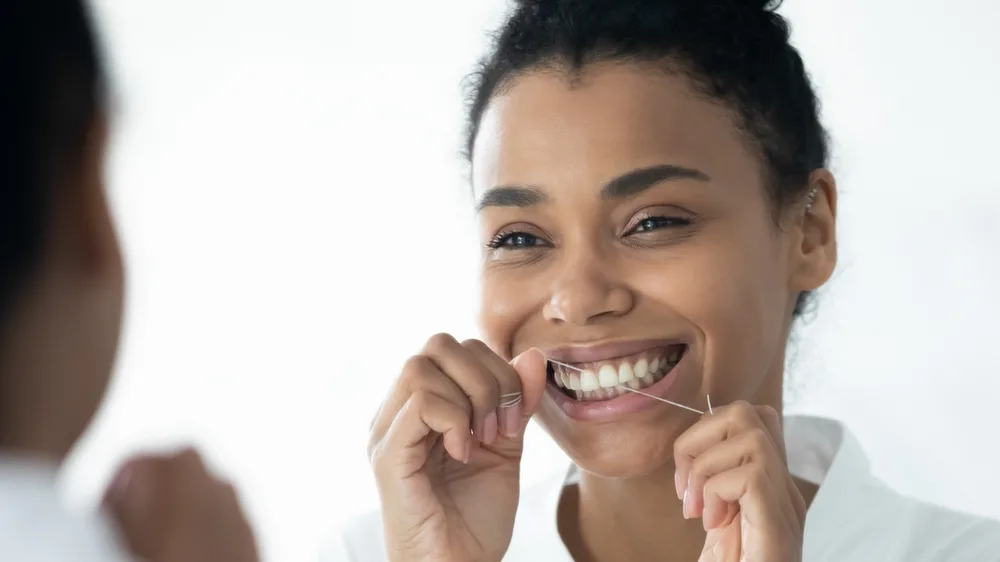
Good flossing should gently slide between the teeth, curve around the side of each tooth, and move under the gumline slightly without snapping into the gums. Bleeding can happen if gums are inflamed or if flossing has been inconsistent. Gentle daily flossing often helps gums become calmer over time.
If regular floss is hard to use, a dental team can suggest floss picks, interdental brushes, or a water flosser based on tooth spacing, braces, bridges, implants, or dexterity.
Should You Brush or Floss First at Night?
Should you brush or floss first at night? Flossing first before bed works well because it clears the spaces between teeth before your final brushing of the day. Nighttime is a strong time for a complete routine because food and plaque do not need to sit between teeth while you sleep.
A nighttime routine can be simple. Floss first, brush for two minutes with fluoride toothpaste, then spit. Many dentists recommend avoiding a heavy water rinse right after brushing so fluoride can stay on the teeth longer.
If you are too tired at night and keep skipping floss, move flossing earlier in the evening. A routine that fits your schedule is easier to keep.
Do You Floss Before or After Brushing in the Morning?
Do you floss before or after brushing in the morning? Flossing before brushing can still be helpful in the morning, especially if you prefer to start the day with a clean mouth. Morning brushing removes plaque that built up overnight and refreshes the mouth.
Some people brush before breakfast. Others brush after eating. If you eat or drink something acidic, such as citrus or soda, waiting before brushing can help protect enamel. Rinsing with water after eating can also help until it is time to brush.
Morning flossing is fine if that is when you are most consistent. The goal is to clean between the teeth once daily, not to create a routine that feels too hard to repeat.
How to Floss Without Hurting Your Gums
Flossing should not feel like cutting into the gums. If floss snaps down hard, it can irritate the tissue. Use a slow, controlled motion and guide the floss between teeth.
Choose a Tool That Fits Your Mouth
Curve the floss into a C shape around one tooth, then slide it gently up and down. Repeat on the side of the next tooth before moving to a new space. Use a clean section of floss as you go.
Some tight spaces may need waxed floss. Wider spaces may be cleaned more effectively with an interdental brush. Dental work can also change the right tool. Bridges, implants, retainers, and braces may need special threaders or other cleaning aids.
Common Mistakes in Daily Oral Care
Many routine problems come from speed. Brushing for less than a minute, missing the gumline, flossing only when food is stuck, or scrubbing too hard can leave plaque behind or irritate the mouth.
Using old toothbrush heads can also reduce cleaning power. Replace a toothbrush or electric brush head when the bristles splay, or about every three to four months. Replace sooner after illness or if the bristles wear quickly.
Another common mistake is treating mouthwash as a replacement for brushing or flossing. Mouthwash can freshen breath and may help in some routines, but it does not physically remove plaque from tooth surfaces the same way brushing and flossing do.
When Your Routine Needs a Dental Check
A good home routine should leave the mouth feeling clean and comfortable. Bleeding gums, persistent bad breath, tooth sensitivity, food trapping, tartar buildup, or pain when chewing can mean something needs attention.
Regular dental visits help catch problems that home care cannot solve on its own. SoCal Sleep Dentistry offers comprehensive dental care in Westlake Village, including exams, cleanings, fillings, crowns, bridges, root canals, implants, whitening, clear aligners, mouth guards, and anesthesia options for patients who need added comfort.
If dental anxiety, a low pain threshold, or extensive treatment makes care feel difficult, sedation and anesthesia options may help make treatment more manageable.
Build a Routine Your Teeth Can Count On
Flossing first is a smart move because it clears the spaces between teeth before brushing with fluoride toothpaste. Brushing first can still be effective if you clean thoroughly, but flossing first gives your routine a clear, practical sequence.
A strong routine is simple: clean between teeth once daily, brush twice daily for two minutes, use fluoride toothpaste, and keep dental cleanings on schedule. If your gums bleed, floss gets stuck, or you are unsure which tool to use, a dental visit can help you adjust your routine.
Book an appointment with SoCal Sleep Dentistry in Westlake Village today if you want help checking your gums, improving your daily oral care, or choosing the right flossing tools for your smile.
Frequently Asked Questions
Do you floss or brush first?
Floss first if you want a cleaner sequence. It clears the spaces between teeth before brushing with fluoride toothpaste.
Is it bad to brush before flossing?
No. Brushing before flossing is still helpful if you clean between the teeth thoroughly afterward and do it every day.
Should you floss at night or in the morning?
Either time can work. Nighttime is popular because it removes food and plaque before sleep, but morning flossing is fine if you are more consistent then.
Why do my gums bleed when I floss?
Bleeding can happen when gums are inflamed, or flossing has been inconsistent. Gentle daily cleaning and a dental check can help identify the cause.
Is a water flosser as good as string floss?
A water flosser can help many people, especially around braces, bridges, implants, or hard-to-reach areas. String floss may still be better for scraping tooth surfaces in some areas.
Should I rinse after brushing?
A heavy rinse right after brushing can wash away fluoride. Many dentists suggest spitting after brushing and keeping the fluoride on the teeth longer.
How often should I replace my toothbrush?
Replace your toothbrush or electric brush head about every three to four months, or sooner if the bristles look worn.
Should I floss before or after brushing?
Floss before brushing if possible. This order clears debris first, then brushing finishes the routine with fluoride toothpaste.