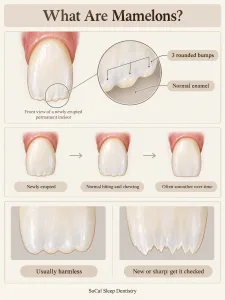

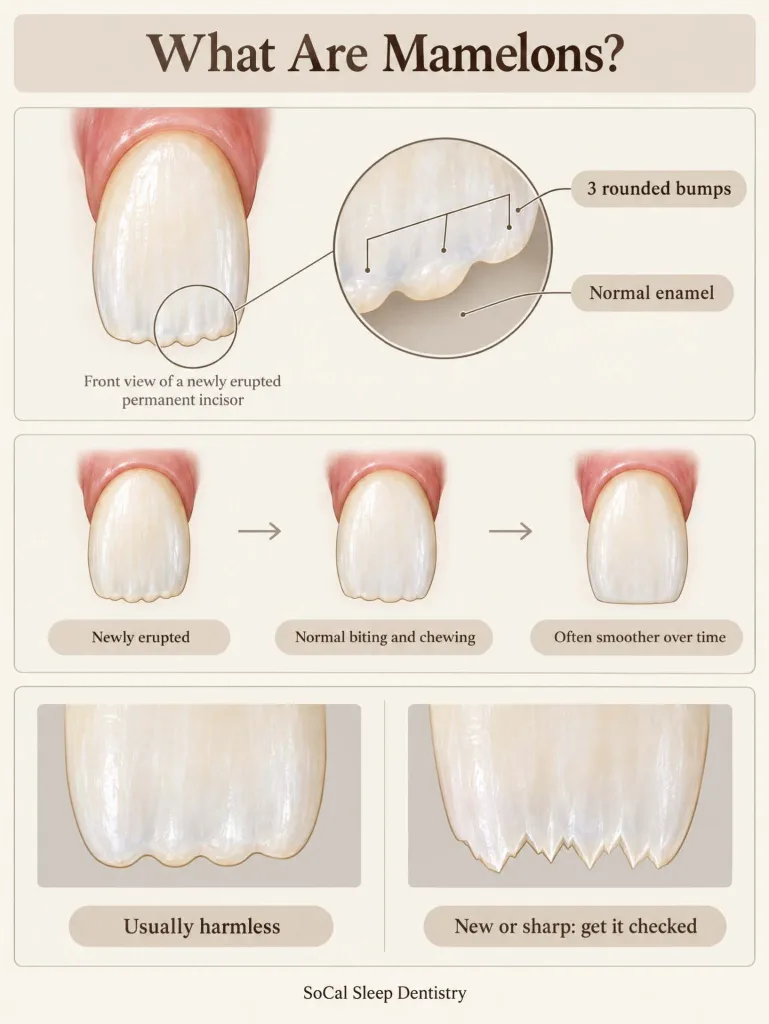
Small ridges along the edges of your front teeth can look unusual, especially if you have only recently noticed them. They may make a tooth look wavy, bumpy, or slightly jagged. In many cases, those ridges are a normal part of how permanent teeth develop.
So, why are there ridges on my teeth? If the bumps sit along the biting edge of your front teeth, they may be mamelons. These small rounded bumps are common when permanent front teeth first come through. They often become smoother over time as the upper and lower teeth meet during biting and chewing.
AtSoCal Sleep Dentistry, we can check ridges that have stayed into adulthood or appeared more recently. A dental exam can help us tell normal tooth shape apart from a chip, wear, or another change in the enamel. This guide explains what mamelons are, why they form, when they tend to fade, and what you can do if you do not like how they look.
Why Are There Ridges on My Teeth?
Ridges on newly erupted permanent front teeth are often mamelons. They are a normal part of tooth development and usually do not mean anything is wrong.
- Mamelons look like small rounded bumps along the biting edge of an incisor.
- They are most noticeable when permanent front teeth first come through.
- Normal biting and chewing often smooth them down over time.
- Some adults keep visible mamelons if their front teeth do not make much contact.
A dental exam can confirm that the ridges are normal and not a sign of damage.
What Are Mamelons?
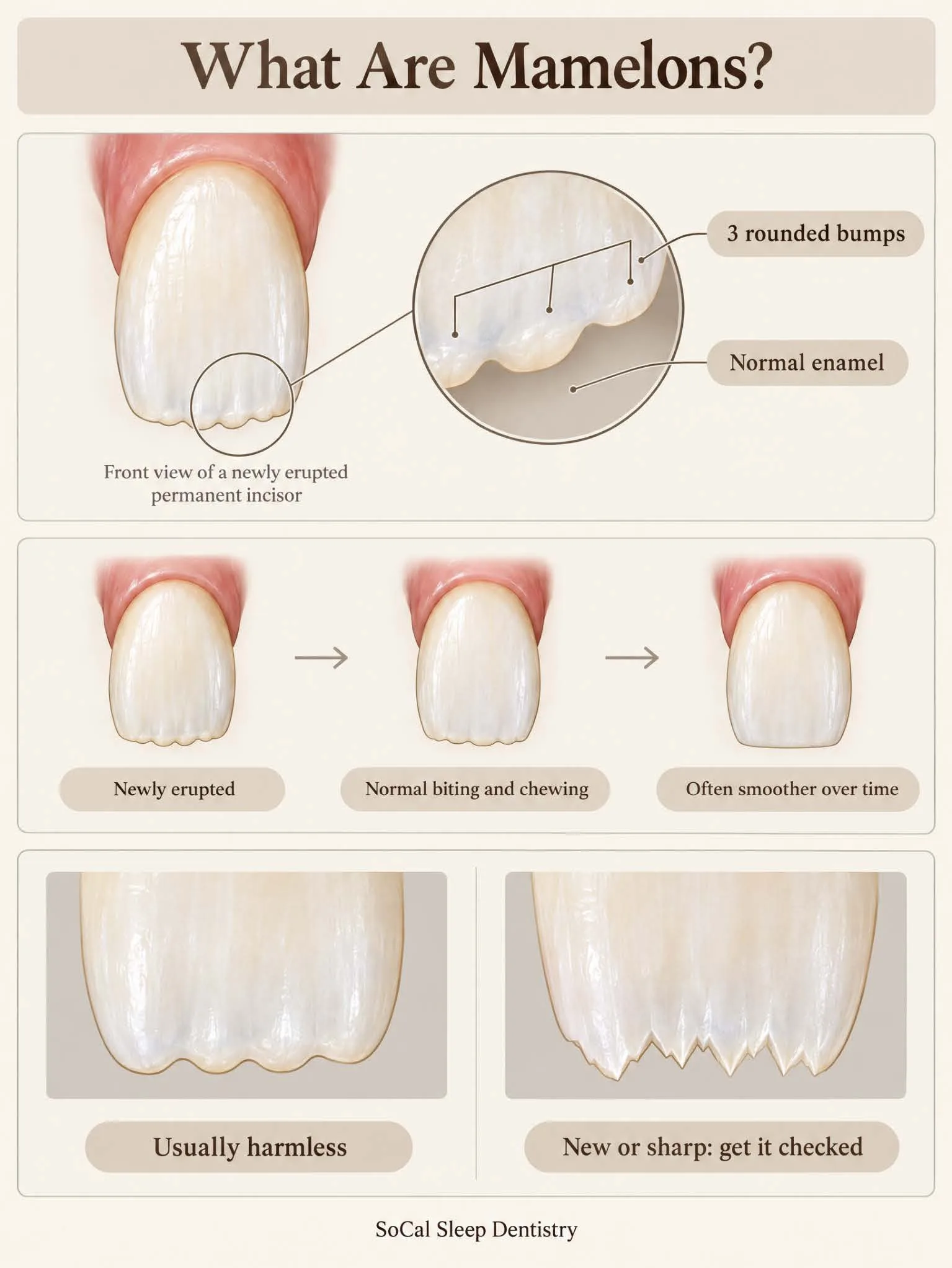
Mamelons are small bumps along the biting edge of the permanent incisors. Your incisors are the flat front teeth you use to bite into food. Newly erupted incisors can have three rounded bumps that give the edge a scalloped look.
The bumps form as the front tooth develops before it comes through the gum. Permanent incisors grow from sections that join together as the tooth forms. The shape left at the biting edge can remain visible when the tooth first erupts.
These bumps are made from normal enamel. They are not decay, and their presence does not mean the enamel is damaged. For most people, they are mainly a feature of younger permanent teeth.
Why Mamelons Are Present in Permanent Teeth
Permanent incisors develop in several sections before they erupt. As those sections come together, the biting edge can form the small rounded bumps we call mamelons. That is why they are most closely linked with newly erupted adult front teeth.
They are a normal feature when permanent incisors first appear. The ridges usually become less obvious as the biting edge wears during everyday use. The amount of wear varies between people, so there is no set age when every ridge disappears.
Baby teeth usually have a smoother edge. This is one reason the bumpy shape can surprise parents when a child’s larger permanent front teeth begin to appear.
When Do Mamelons Teeth Go Away?
Mamelons often start wearing down after the permanent front teeth come through. Each time the upper and lower incisors make contact, small amounts of normal wear can smooth the biting edges. For many people, the ridges become much less noticeable during childhood or the teenage years.
Some remain visible for much longer. If the upper and lower front teeth do not meet, the edges may get very little wear. Crowding or other bite differences can also change the way the teeth touch.
There is no need for the ridges to disappear by a certain age. If the teeth are healthy and you are happy with their appearance, they can stay in place without treatment.
Why Are There Ridges on My Teeth as an Adult?
Visible mamelons can remain into adulthood, and that does not automatically point to a dental problem. Some adults simply have less wear along the front tooth edges. The shape may also become more noticeable after teeth have been straightened.
Your bite can help explain why the ridges have stayed. An open bite, for example, can leave the upper and lower front teeth with little or no contact. Less contact means less natural wear along the edges.
A ridge that appears suddenly is different. A new rough edge may be a small chip, worn enamel, or another change rather than a feature that has been there since the tooth erupted. We can examine the area if you are unsure.
Are Mamelons Different From Chipped Teeth?
Yes. Mamelons usually form a smooth series of rounded bumps across the biting edge. They have been part of the tooth since it erupted and are made from normal enamel.
A chip often changes the shape of a tooth more suddenly. The edge may feel sharp, uneven, or rough to your tongue. You may remember biting something hard or hitting the tooth, though small chips can sometimes happen without an obvious event.
Sensitivity can be another clue that deserves a check. If a ridge is painful, sharp, or new, we can look at the tooth and see what has changed.
Can Other Types of Tooth Ridges Be Normal?
Teeth are not completely flat. Molars and premolars have natural grooves and raised areas that help with chewing. Front teeth can have slight curves and texture too.
The location of the ridge gives us useful information. Mamelons sit along the biting edge of front teeth, especially newly erupted permanent incisors. A line, crack, rough patch, or raised area somewhere else may have a different cause.
Changes in tooth texture can come from wear, small fractures, buildup, or dental work. If something looks new or feels different, a dental exam is the easiest way to find out what it is.
How to Get Rid of Mamelons
Most mamelons need no treatment because they are a normal part of tooth shape. Many smooth down on their own as the teeth meet and wear over time. If yours are still visible, leaving them alone is often completely reasonable.
Some people dislike the scalloped look and want a smoother smile line. A dentist can examine the enamel, bite, and tooth shape before discussing cosmetic changes. One option used in dentistry is conservative tooth reshaping, which removes a very small amount of enamel from the edge.
Do not file or sand the ridges at home. Enamel does not grow back once it has been removed, and taking away too much can damage the tooth. Any reshaping should be planned and carried out by a dental professional.
Do Mamelons Affect Your Bite or Dental Health?
Mamelons themselves usually do not cause pain or harm the tooth. They are a shape difference rather than a disease. Most people can brush, floss, eat, and speak normally with them.
Ridges that stay into adulthood can sometimes give us a clue about how the front teeth meet. If there has been very little contact between the upper and lower incisors, the edges may not have had a chance to wear down. That does not prove there is a bite problem, but it can be worth checking during a routine exam.
We can look at the way your teeth meet if you have concerns about your bite. SoCal Sleep Dentistry also provides clear aligner treatment for suitable patients who want to address tooth alignment.
Should You Be Worried About Ridges on Your Teeth?
Mamelons are usually harmless, especially if the ridges have been there since your permanent teeth came through. They do not need treatment simply because they are visible.
A newer ridge or rough edge deserves more attention. Book a dental visit if a tooth changes shape, becomes sensitive, starts hurting, or feels sharp. The same applies if you notice a crack or a piece of enamel has broken away.
You do not need to work out the cause yourself. We can check the enamel and bite to see if you are looking at normal tooth shape or a newer change.
Book a Dental Check if Your Tooth Ridges Look or Feel Different
The answer to why there are ridges on my teeth is often simple. Small bumps on permanent front teeth are commonly mamelons, and they can be a normal part of tooth development. Many wear down naturally, while others remain visible into adulthood.
AtSoCal Sleep Dentistry, we can check the shape of your teeth and tell you if the ridges look normal. If you are unhappy with their appearance, we can also discuss suitable cosmetic options after examining your enamel and bite.
Book an appointment with us if a ridge has appeared recently, feels sharp, causes sensitivity, or makes you concerned about your smile.
Frequently Asked Questions
What are mamelons on teeth?
Mamelons are small rounded bumps along the biting edges of permanent front teeth. They are a normal part of tooth development and are often easiest to see soon after the teeth erupt. Most become smoother over time through normal biting and chewing.
Why are there ridges on my teeth even after braces?
Braces or clear aligners can straighten teeth, but they do not automatically remove mamelons. If the ridges did not wear down before or during treatment, they may still be visible once the teeth are straighter.
Are mamelons a sign of strong teeth?
Mamelons are normal enamel, but their presence does not tell us how strong your teeth are. Tooth health depends on many other factors, including enamel condition, decay, gum health, and daily care.
Do mamelons grow back?
No. Mamelons do not grow back after they have worn away or been professionally reshaped. Enamel cannot regrow once it has been removed.
Can adults have mamelons?
Yes. Some adults still have visible mamelons because their front teeth have had less contact and wear. If the bumps have always been there and the teeth are healthy, they may need no treatment.