
A cavity can be frustrating because it is not always obvious at first. You might feel a quick zing when you drink something cold, notice food catching in the same spot, or see a small, dark mark that wasn’t there before. Some cavities hurt. Some do not. Some are visible in the mirror. Others hide between teeth or under old dental work until a dentist finds them during an exam.
Common signs of a cavity include tooth sensitivity, pain when eating sweets or drinking hot or cold liquids, a visible hole or pit, brown, black, or white staining, food trapping, roughness, bad taste, or pain when biting. Early tooth decay may cause no symptoms at all, which is why regular dental visits matter.
At SoCal Sleep Dentistry in Westlake Village, dental fillings are used to repair teeth affected by decay or damage. The decayed portion is removed, the cavity is cleaned, and the filling material is shaped and polished so the tooth can work more comfortably again.
How Can I Tell if I Have a Cavity?
Look for changes in how the tooth feels, looks, and responds during eating or brushing. A cavity is a damaged area of tooth structure caused by tooth decay. Once enamel breaks down enough to form a hole, the tooth usually needs dental treatment.
Here is a simple symptom guide:
| What you notice | What it may suggest |
| Sensitivity to sweet, hot, or cold foods | Tooth decay, exposed dentin, worn enamel, or a leaking filling |
| A dark spot or white chalky patch | Stain, early decay, or enamel change |
| A visible hole or pit | A cavity may have formed |
| Food catching in one area | Tooth shape change, open contact, decay, or broken filling |
| Pain when biting | Deep cavity, crack, high filling, or inflamed nerve |
| Bad taste or swelling | Possible infection that needs prompt care |
A symptom can point you in the right direction, but only a dental exam can confirm whether the tooth has a cavity.
How Can I Tell if I Have a Cavity at Home?
How can you tell if you have a cavity at home? Check for warning signs, but you cannot diagnose decay with certainty on your own. Use good lighting, a mirror, and gentle observation. Do not poke the tooth with sharp objects.
Look for a spot that feels rough, looks darker than nearby enamel, traps food, or reacts to sweets and temperature changes. Floss that shreds in the same place can also suggest a rough filling edge, tartar, or tooth damage.
Home checks are helpful because they tell you when to book a visit. They are not a substitute for X-rays, bite checks, and a professional exam.
What Does a Cavity Look Like?
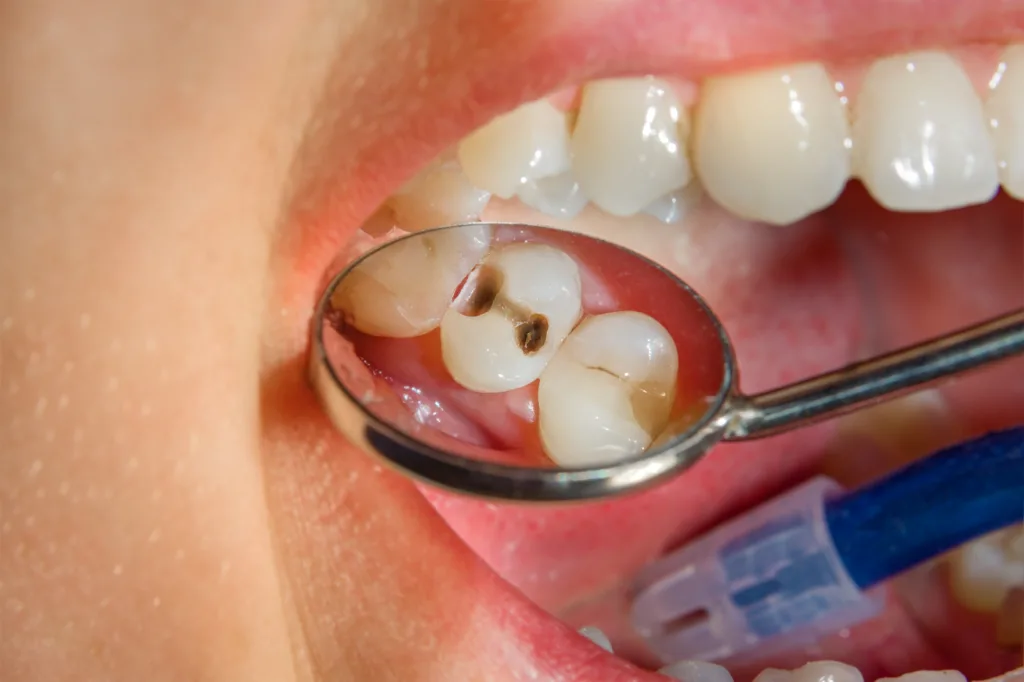
A cavity can look different depending on its location and the extent of tooth decay. Early enamel changes may look white and chalky. As decay develops, the area may become yellow, brown, gray, or black.
A deeper cavity may look like a small hole, pit, shadow, or broken edge. On molars, it may appear in the grooves of the chewing surface. Between teeth, it may be hard to see without an X-ray. Around older fillings, decay may appear as darkening, roughness, leakage, or a gap near the filling edge.
A dark mark is not always decay. Stains, tartar, old dental work, and trauma can also change tooth color. A dentist can tell the difference.
Why Early Tooth Decay Can Be Hard to Spot
Early tooth decay can be quiet. Enamel has no nerves, so damage in the outer layer may not hurt. That is why a tooth can look mostly normal even while minerals are being lost.
As decay reaches deeper layers, symptoms become more likely. Dentin is more sensitive than enamel, so hot, cold, sweet, or acidic foods may cause discomfort. If decay reaches the inner pulp, pain can become stronger, linger longer, or occur without a clear trigger.
This is one reason routine exams are important. A small cavity may be treated with a filling. A deeper cavity may need more involved care.
Sensitivity Versus a Cavity
Sensitive teeth do not always mean cavities. Sensitivity can come from gum recession, enamel wear, brushing too hard, grinding, whitening products, exposed roots, or recent dental treatment.
A cavity is more likely when sensitivity is tied to one tooth, keeps returning to the same spot, is accompanied by visible discoloration, or causes pain when biting. Sweet sensitivity can also be a clue, as sugar can irritate exposed dentin or cause decay.
If the sensitivity feels brief and affects several teeth, dentin exposure or enamel wear may be involved. If one tooth has sharp, repeated symptoms, get it checked.
Tooth Pain That Should Not Wait
Tooth pain is one of the clearest signs that a cavity may be getting deeper. Pain may feel sharp, dull, throbbing, or pressure-like. It may happen when eating, brushing, drinking cold water, or lying down.
Call the dentist right away if pain lasts more than a day or two, wakes you up, spreads into the jaw, or makes chewing difficult. Pain with swelling, fever, pus, or a bad taste can point to infection and needs prompt care.
Pain relievers may help temporarily, but they do not remove decay. The tooth still needs evaluation.
Why Cavities Form
Cavities form when bacteria in plaque use sugars and starches to make acids. Those acids weaken enamel over time. Frequent snacking, sugary drinks, poor brushing, dry mouth, deep grooves, and missed cleanings can raise the risk.
Tooth location matters too. Back teeth have grooves that can trap food. Areas between teeth can hold plaque if flossing is missed. Teeth near old fillings can develop decay if edges wear, crack, or leak.
Prevention is daily work. Brushing with fluoride toothpaste, cleaning between teeth, drinking water, limiting frequent sugar exposure, and keeping dental visits on schedule can lower risk.
How Dental Fillings Treat Cavities
During treatment at SoCal Sleep Dentistry, the dentist examines the affected area, numbs the tooth and surrounding tissue, removes the decayed portion, cleans the cavity, places the filling material, shapes it, cures it if needed, and adjusts the bite.
Composite resin is tooth-colored and can blend with your smile. Amalgam may be used in some situations where strength is important. The right material can vary based on the tooth location, size of the cavity, bite pressure, and personal preference.
A filling helps restore the tooth’s shape and function. It also seals the treated area, helping protect the remaining tooth structure.
What Happens if a Cavity Is Ignored?
A small cavity can become larger if left untreated. As decay spreads, it can weaken the tooth, reach the nerve, cause infection, or create pain that affects eating and sleep.
A larger cavity may require a larger filling, crown, root canal treatment, or extraction. Treatment usually becomes more involved as decay progresses into deeper layers.
Waiting can also make the tooth more fragile. If a wall of the tooth breaks, the repair may be more complex than a simple filling, so schedule care as soon as possible.
What to Do Before Your Appointment
If you think you have a cavity, keep the area clean and avoid chewing hard or sticky foods on that side. Rinse with water after sweet foods. Brush gently and clean between teeth without forcing floss into a painful area. Book a dental visit soon.
Do not place aspirin directly on the tooth or gum because it can irritate the tissue. If a piece of tooth or filling breaks, save it if you can and bring it to your appointment.
Describe your symptoms clearly when booking. Mention pain, swelling, sensitivity, visible holes, broken fillings, or trouble biting so the dentist can guide your visit.
Keep Small Tooth Problems From Becoming Bigger Ones
Watch for tooth sensitivity, pain with sweets or temperature changes, visible pits, dark marks, food trapping, rough edges, bad taste, or pain when biting. A cavity can also form quietly, so a dental exam is still the clearest answer.
SoCal Sleep Dentistry in Westlake Village provides dental fillings, exams, X-rays, cleanings, and comfort-focused care for patients with tooth decay, cavities, tooth pain, and weakened teeth.
Book an appointment with SoCal Sleep Dentistry today if you think you have a cavity or want a dentist to check a sensitive, painful, or discolored tooth. Do not wait for the problem to get worse.
Frequently Asked Questions
How can I tell if I have a cavity?
You may notice tooth sensitivity, pain with sweets or temperature changes, visible holes, dark spots, food trapping, roughness, or pain when biting.
How can I tell if I have a cavity at home?
At home, check for pain, sensitivity, discoloration, food catching, rough spots, or visible holes. A dentist still needs to confirm the cause.
What does a cavity look like?
A cavity may look like a white chalky patch, brown or black spot, small hole, pit, shadow, or broken area on the tooth.
Can a cavity have no symptoms?
Yes. Early tooth decay may have no symptoms, especially when it is still in the outer enamel layer.
Can tooth sensitivity mean a cavity?
Yes, but sensitivity can also come from gum recession, enamel wear, grinding, whitening, exposed roots, or recent dental work.
Do cavities always hurt?
No. Some cavities do not hurt until decay reaches deeper layers of the tooth.
What happens during a dental filling?
The decayed part of the tooth is removed, the cavity is cleaned, filling material is placed, and the bite is adjusted.
When should I call about tooth decay?
Call now if you have tooth pain, swelling, sensitivity, visible holes, broken fillings, food trapping, or pain when biting.