
Finding out you have a cavity can feel frustrating, especially if you brush every day and thought your teeth were in good shape. It can feel more unsettling when a child, teen, or adult has several cavities at one visit. Many patients start comparing themselves to friends or family and wonder if their number is unusually high. The truth is that cavities are common, but “common” does not mean they should be ignored.
So, how many cavities are normal? There is no perfect number that applies to every person. Some people go years without a cavity. Others develop cavities more often because of enamel strength, dry mouth, diet, brushing habits, genetics, medication, dental crowding, or past access to care. A better question is what the pattern says about your current oral health.
We are going to look at what different cavity numbers can mean, when dental fillings may be needed, and how to lower your risk.
How Many Cavities Is Normal for Most People?
Dentists do not usually describe a certain number of cavities as normal in the same way they might describe a normal temperature or blood pressure. A cavity means bacteria and acid have damaged the tooth structure. Even one cavity deserves attention because decay can grow deeper if it is left untreated.
Still, cavities are very common. Many adults have had at least one cavity, filling, or area of tooth decay during their lifetime. A single cavity found during a routine visit may not mean you are doing everything wrong. It may mean one area was harder to clean, a filling edge changed, saliva flow decreased, or eating habits gave bacteria more time to affect enamel.
Multiple new cavities at one appointment point to a stronger risk pattern. That does not mean the situation is hopeless. It means your dental team should look at the cause, not only the number. The goal is to treat the current cavities and reduce the chance of more decay.
How Common Are Cavities?
Patients often ask how common cavities are because they want to know if their diagnosis is unusual. Cavities are among the most frequent dental problems for both children and adults. They can affect baby teeth, adult teeth, molars, front teeth, and areas around old dental work.
Are cavities common in people who brush daily? Yes, they can be. Brushing matters, but it is one part of cavity prevention. Flossing, fluoride exposure, saliva, diet, dental visits, tooth shape, and health history all play a role. Molars with deep grooves can trap plaque. Crowded teeth can make flossing harder.
A person with cavities is not careless by default. The more useful approach is to find out where the decay is forming and why. Once that pattern is clear, prevention becomes more specific.
How Many Cavities Are Normal in a Lifetime?
The phrase how many cavities are normal in a lifetime is difficult because lifetime risk changes over time. A person may have few cavities during childhood, then develop more as an adult due to dry mouth, gum recession, diet changes, or aging dental work. Another person may have several childhood cavities and then very few later, after building stronger habits.
Zero cavities is possible, but many people do not reach adulthood without any decay. A few fillings over many years may be common, yet frequent new cavities are a sign that something needs to change. The number matters less than the speed and pattern.
One cavity every several years has a different meaning than several cavities every year. New decay at most checkups suggests that plaque, sugar exposure, dry mouth, or another risk factor is still active. That pattern deserves a prevention plan.
How Many Cavities Is Normal Per Year?
How many cavities are normal per year? Ideally, none. A year with no new cavities means your home care, diet, saliva, fluoride exposure, and dental visits are working well enough to protect your teeth.
One new cavity in a year can happen, especially if there is a specific reason. A cracked filling, a deep groove in a molar, braces, dry mouth, or a hard-to-clean space can lead to decay. A dentist can repair the tooth and help you focus on that weak spot.
Several cavities in one year are more concerning. It may point to frequent snacking, sugary drinks, missed flossing, high plaque levels, acid reflux, medication-related dry mouth, or early gum recession exposing root surfaces. A risk-based plan may include more frequent cleanings, fluoride treatment, sealants, prescription toothpaste, diet changes, or adjustments to brushing and flossing technique.
How Many Cavities Is Normal for a Kid?
How many cavities are normal for a kid? The healthiest answer is still none, but cavities in children are common. Baby teeth have thinner enamel than adult teeth, so decay can spread faster. Children may also need help brushing longer than parents expect, especially around the back molars.
A child with one cavity may need a filling and a closer look at brushing, snacking, and fluoride use. Several cavities may suggest a higher risk level. Frequent juice, sticky snacks, bedtime milk after brushing, and missed flossing between teeth can all contribute.
Baby teeth matter because they help children chew, speak, and hold space for adult teeth. Treating decay in baby teeth can reduce pain risk and help protect normal development. A dentist can decide if a filling, fluoride, crown, or another treatment is best based on the tooth and the depth of decay.
How Many Cavities Is Normal for a 13-Year-Old?
Parents often ask how many cavities are normal for a 13-year-old because this age can be tricky. Many adult teeth have already come in, and second molars may be erupting. Teens may brush independently, snack more often, drink sports drinks, or wear braces that make cleaning harder.
No cavities is the goal for a 13-year-old. One cavity can happen, but it should lead to a closer look at the teen’s daily routine. Cavities between teeth may suggest inconsistent flossing. Cavities in molars may suggest deep grooves, plaque retention, or a need for sealants. Decay around braces can mean brushing needs more time and better technique.
Several cavities at age 13 should not be brushed off as typical. This is a good moment to reset habits before more adult teeth are affected. A dentist can help the teen understand the pattern without shame and recommend steps that fit their age and lifestyle.
Can You Reverse Cavities?
Can you reverse cavities? Very early enamel damage may be repaired with minerals before a hole forms. A dentist may call this early demineralization. It can look like a chalky white spot, especially near the gumline or around braces.
Once decay breaks through the enamel and forms a cavity, the missing tooth structure cannot grow back naturally. At that point, a filling may be needed. A filling removes the decayed portion, cleans the space, and seals the tooth with filling material.
Fluoride, improved brushing, flossing, and diet changes can still help protect the rest of the mouth. They may also help stop early weak spots from turning into cavities. The key is getting an exam so you know which stage the tooth is in.
When Cavities Need Dental Fillings
Dental fillings repair teeth affected by decay or damage. At SoCal Sleep Dentistry, the dental filling process includes an examination, local anesthesia, removal of the decayed portion, cleaning the cavity, placing filling material, shaping it, polishing it, and checking the bite. The filling helps protect the remaining tooth and restore chewing comfort.
Composite resin is a common tooth-colored option that can blend with the surrounding tooth. The best material can vary based on the tooth’s location, the size of the cavity, bite pressure, and patient needs.
Patients who feel anxious about dental work can ask about comfort options. SoCal Sleep Dentistry offers anesthesia options upon request, including nitrous oxide, moderate sedation, deep sedation, and general anesthesia.
When Cavities Become Severe Tooth Decay
Severe tooth decay can develop when a cavity grows deeper into the tooth. Early decay may cause no pain. Deeper decay may cause sensitivity to sweets, cold, heat, or chewing pressure. If bacteria reach the inner pulp, pain can become stronger and more constant.
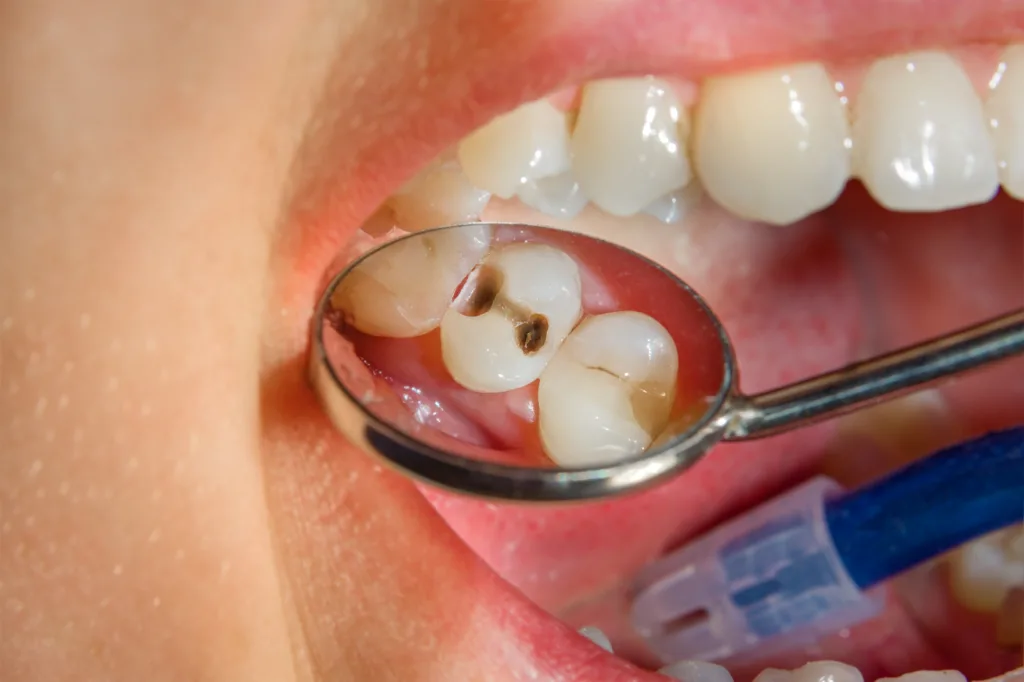
Signs that decay may be more advanced include visible holes, dark areas, swelling, bad taste, gum bumps, facial swelling, or pain that wakes you at night. These symptoms need prompt dental care. A filling may be enough for some teeth, but deeper decay may need a crown, root canal, or extraction.
Waiting for pain is risky because cavities can grow before symptoms appear. Routine checkups help find smaller areas of decay when treatment is usually simpler.
How to Lower Your Cavity Risk
Cavity prevention works best when it targets your personal risk. A patient who has dry mouth may need a different plan than a patient with deep molar grooves. A teen with braces may need different brushing tools than an adult with older fillings.
Daily habits still matter for almost everyone. Brush twice a day with fluoride toothpaste. Floss once a day, especially between teeth that touch. Drink water more often than sweetened drinks. Keep sugary snacks to mealtimes rather than grazing throughout the day.
Your dentist may suggest fluoride treatment, dental sealants, prescription toothpaste, filling replacement, or more frequent cleanings. These recommendations are based on what is happening in your mouth.
Help Prevent Tooth Decay with SoCal Sleep
How many cavities are normal is a common question, but the most helpful answer is personal. No new cavities is the goal. One cavity can happen. Several cavities in a year, in a child, or in a teen may signal that active risk factors need attention.
Cavities are treatable, and a filling can often protect a tooth before the damage becomes more serious. Better prevention can also reduce the chance of new decay, especially when your dental team helps identify the cause.
If you have been told you need a filling or you are concerned about cavity risk, schedule an appointment with SoCal Sleep Dentistry today.
Frequently Asked Questions
How many cavities are normal?
No number of cavities is ideal, but many people develop at least one cavity during their lives. The pattern matters most, especially if new cavities appear often.
How many cavities are normal in a lifetime?
Many adults have had at least one cavity or filling. Frequent new cavities over time may suggest active risk factors that need dental guidance.
How many cavities are normal for a kid?
No cavities is the goal for children, but cavities are common. A child with any cavity should see a dentist to prevent pain and protect oral development.
How many cavities are normal for a 13-year-old?
No cavities is the healthiest goal for a 13-year-old. One cavity can happen, but several cavities should prompt a closer look at brushing, flossing, diet, and dental risk.
How many cavities are normal per year?
Ideally, none. One cavity may have a specific cause, but several cavities in a year usually mean a prevention plan needs to change.
Can you reverse cavities?
Very early enamel weakness may improve with fluoride and better care. A formed cavity with missing tooth structure usually needs a dental filling.
Are cavities common?
Yes. Cavities are common in children, teens, and adults. Common does not mean harmless, so early treatment still matters.
What can happen with severe tooth decay?
Severe tooth decay can cause pain, infection, swelling, and tooth loss. Treatment may involve a filling, crown, root canal, or extraction, depending on the damage.